What is enaction?
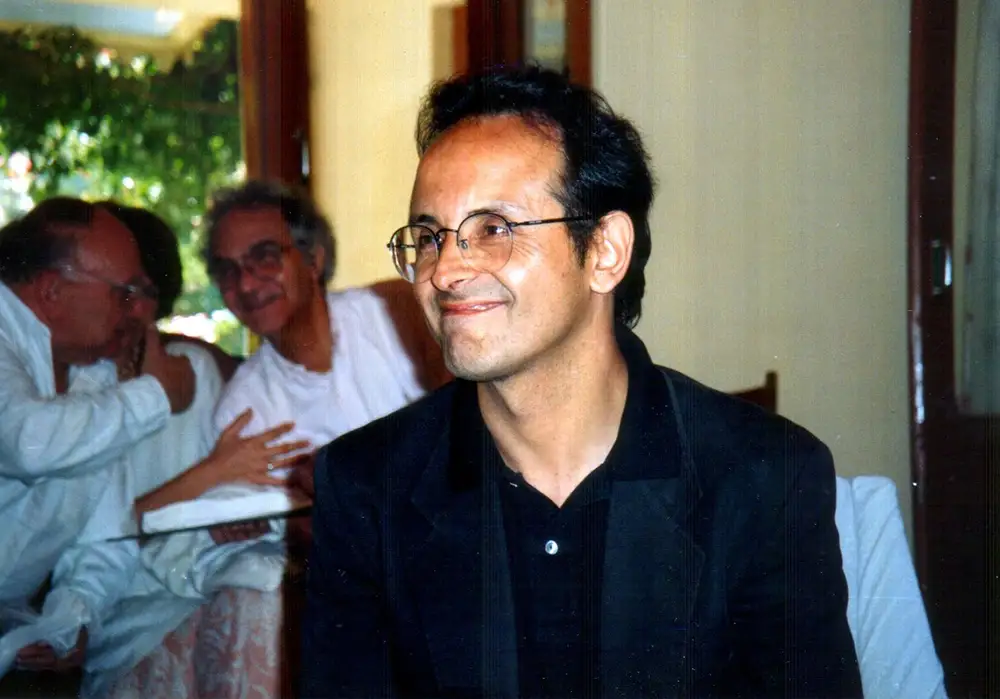
1. What is enaction according to Francisco Varela?
Enaction is a fundamental theory of cognition developed by Chilean biologist and philosopher Francisco Varela, in notable collaboration with Evan Thompson and Eleanor Rosch. This school of thought marked a break with the traditional approach to information processing.
It is based on the idea that living beings are dynamic systems in constant and reciprocal interaction with their environment. More than simple perception, enaction asserts that cognition is not a passive process, but an emergence resulting from the organism's activity.
2. The fundamental principles of enaction
The theory of enaction is based on abandoning the idea that the brain is simply a computer processing external information. It highlights two essential pillars of cognitive experience:
Dynamic interaction between organism and environment
According to this perspective, cognition cannot be reduced to internal processes of information processing. Rather, it emerges from the dynamic interaction between the organism and its environment.
The organism does not simply perceive the world passively; it acts actively on it, by exploring, manipulating and interacting. This interaction is considered absolutely fundamental: the organism creates its cognitive world by acting on it.
Cognition as action and construction
This active exploration allows the organism to develop effective action schemas – practical "know-how". These schemas are then stored and can be used to solve similar problems in the future.
Varela's approach thus emphasises the importance of learning through practice and experience rather than through mere reception and encoding of knowledge or information. Concrete action is what structures perception and intelligence.
3. Enaction and learning: the importance of practice
Varela's principles of enaction have major implications in varied fields such as psychology, robotics and neuroscience. By highlighting the central role of action in constructing meaning, it values bodily engagement and lived experience in any learning process. For enaction, learning is doing, because the organism is the source of its own cognition.
4. Enaction, pillar of workplace learning
The theory of enaction is not limited to philosophy; it is the foundation of modern approaches to support and training in business.
It asserts that the development of a team or leader does not come solely from passive reception of information (as in a simple lecture), but from real-world situations and dynamic interaction:
Team cohesion: It is by acting together, by solving collective problems (such as through immersive exercises or targeted team building), that the team enacts new schemas of effective collaboration.
Leadership and Performance: A leader does not understand leadership, they embody it through their actions. Cognition is embodied: skills in managing conflict or decision-making are acquired by practising in an environment that simulates discomfort or complexity.
This is why All Leaders Initiative bases its interventions – coaching of managers, performance diagnostics, or immersive Mission One seminars – on learning through experience: because to sustainably transform teams and leaders, we must act to learn, in accordance with the principles of enaction.